Introduction to the exhibition
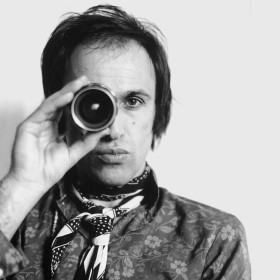
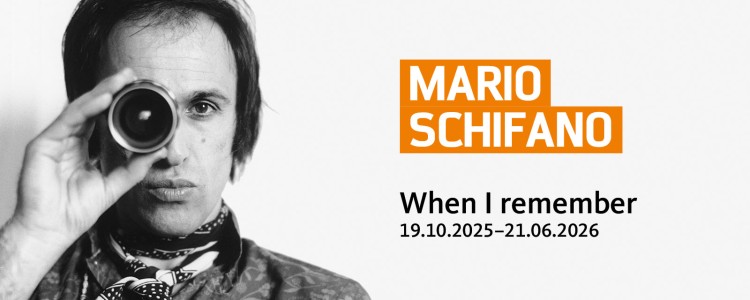
Mario Schifano (Khoms, Italian Libya 1934 – 1998 Rome, Italy) is considered an icon of Italian postwar art. He was a painter, filmmaker, bon vivant—a rock star of the art scene. Restless, sensitive, and eager to experiment, he created a multifaceted body of work imbued with biographical experiences and contemporary history.
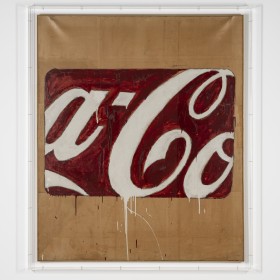
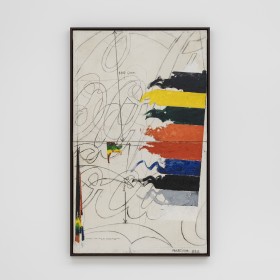
Schifano’s career begins in the 1960s in Rome, a vibrant metropolis and one of the most exciting art centers in Europe at the time. The scene’s meeting places are the legendary Caffè Rosati and Galleria La Tartaruga. There, a loose group of artists form the Scuola di Piazza del Popolo, named after the square where they meet. Schifano is their central figure. Through his paintings, in which he processes his impressions of the urban environment with its billboards and street signs, he becomes an important representative of Italian Pop Art.
In 1963–64, he spends several months in New York, where he immerses himself in the pop and avant-garde scene. Among others, he meets the artists Andy Warhol and Jasper Johns, as well as the poet Frank O’Hara. The underground cinema with its experimental films leaves a particularly lasting impression on him. Inspired by this, Schifano begins to work with the medium himself. His most notable film, Umano non umano (1969), is a kaleidoscopic montage of various recordings, featuring Mick Jagger and Keith Richards.
He is close friends with the Rolling Stones, who dedicate their song Monkey Man to him. Nights at the famous Piper Club, his band Le Stelle di Mario Schifano, headlines about drug excesses, and an affair with the actress and singer Marianne Faithfull make him a cult figure of a generation that lived “sex, drugs, and rock ‘n’ roll.”
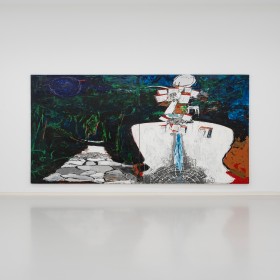
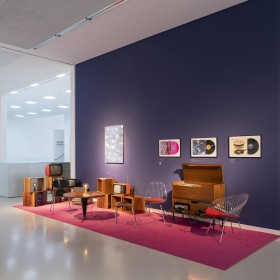
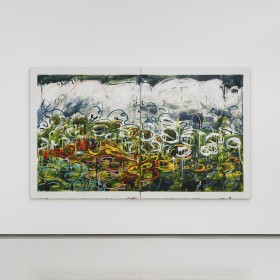
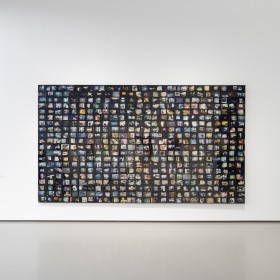
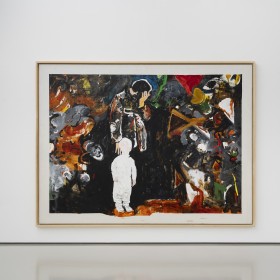
Schifano repeatedly finds himself in personal crises, which also affect his painting. In the 1970s, he increasingly withdraws and rarely leaves his studio. Nevertheless, the outside world continues to reach him—via television, which becomes a new and rich source of inspiration. He has tube televisions everywhere in his living and working spaces, sometimes stacked on top of one another and always running around the clock. Photographs of the flickering television screens serve as the starting point for Schifano’s paintings. In the 1980s and 1990s, he returns more strongly to “classical” painting, which is now dominated by an expressive and gestural application of paint. However, during these decades, he also remains faithful to photography.
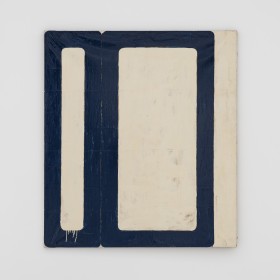
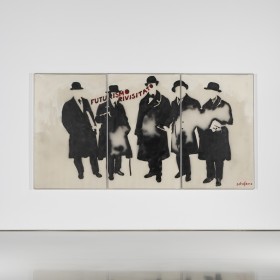
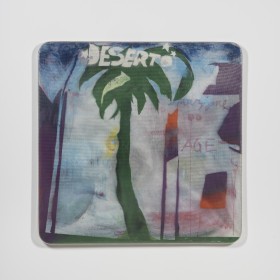
Schifano’s work defies clear categorization. Over the course of several decades, he continuously develops new series. His gaze is open, his themes diverse, ranging from everyday phenomena and references to art history to the incessant flood of images from the mass media. Social and political events, from the protests of 1968 to the Gulf War of 1990–91, also find their way into his paintings. Schifano switches between different visual languages and experiments with paint application and surfaces. Always on the lookout for new forms of expression, he uses a variety of materials, including lacquer, packing paper, photo emulsion, sand, and acrylic glass.
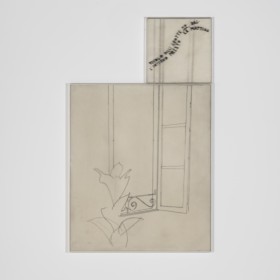
Schifano has long enjoyed cult status in Italy. Outside his homeland, however, he remains surprisingly unknown to this day. With MARIO SCHIFANO. When I Remember, SCHAUWERK Sindelfingen is now presenting the artist’s first solo museum exhibition in Germany. The exhibition brings together paintings, drawings, films, and photographs, thus showcasing the diversity of his work.
The title of the exhibition highlights Schifano’s close connection between life and art, while also underscoring the retrospective nature of the show: a journey through the decades—from the early 1960s to his late work in the 1990s. Despite setbacks and crises, Schifano remained curious and extremely productive until the end, driven by a tireless creative urge and with a keen eye for his own time.
Immerse yourself in an eventful life, filled with both success and failure, passion and inner turmoil.